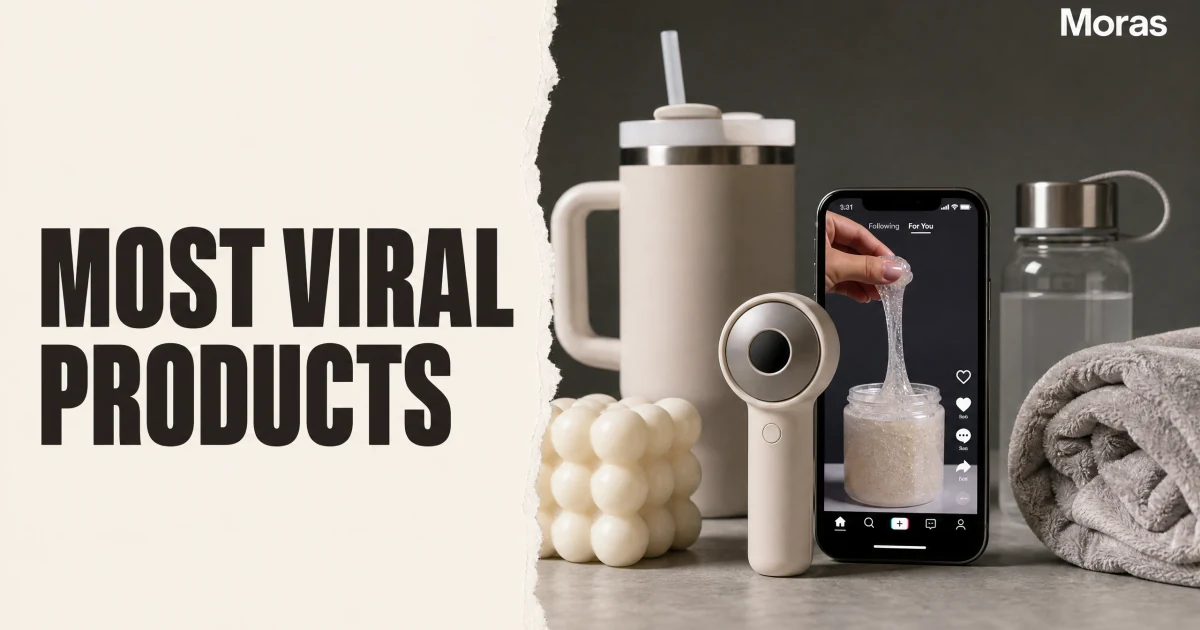
What are the most viral products on TikTok? The strongest candidates are usually products that solve a visible problem, produce a satisfying transformation, or invite an immediate comparison. Beauty tools, kitchen problem-solvers, home-organization products, cleaning gadgets, wellness accessories, fashion problem-solvers, pet products, and small tech accessories all give creators clear demonstrations and multiple video angles.
That does not mean every item in those categories will sell. A viral product earns attention. a useful affiliate product also needs a clear buyer, credible proof, acceptable economics, reliable fulfillment, and enough creative room for more than one post. Use the categories below as a shortlist, then test the specific SKU before investing in content.
What Makes a Product Likely to Go Viral on TikTok
TikTok-friendly products communicate quickly. A viewer should understand the problem, the action, and the result without needing a long explanation. A lint remover cleaning a sofa, a storage tool creating order, or a kitchen gadget completing one awkward task gives the creator a visual story in seconds.
The second requirement is creative range. One product should support several honest angles: a demonstration, a comparison, a mistake to avoid, a routine, an objection, or a use case for a specific person. If the product has only one obvious shot, creators quickly run out of useful variations even when the first video performs.
Virality is also contextual. Season, price, inventory, comments, and creator saturation can change whether a particular SKU is worth promoting. The category can remain attractive while a heavily copied product inside it becomes a poor test.
Eight Product Categories with Strong Viral Potential
These categories are not a fixed ranking. They are recurring creative patterns that make product value easy to show. Choose the category that fits your audience and production strengths, then compare individual products inside it.
| Product category | Why it works on video | Useful creator angles | Main risk |
|---|---|---|---|
| Beauty tools | Close-up use and visible technique | Routine, comparison, application mistake | Unsupported beauty claims |
| Kitchen problem-solvers | One task becomes faster or cleaner | Demo, time-saving use, cleanup test | Single-use novelty |
| Home organization | Clear before-and-after transformation | Small-space setup, drawer reset, packing | Staged results that feel unrealistic |
| Cleaning gadgets | Motion and visible proof | Mess test, surface comparison, maintenance | Exaggerated performance |
| Wellness accessories | Fits repeatable daily routines | Desk, travel, sleep, recovery routines | Medical or treatment claims |
| Fashion problem-solvers | Solves fit, comfort, or styling friction | Outfit fix, fit check, multiple uses | Sizing and return risk |
| Pet products | Built-in emotion plus visible use | Routine, cleanup, enrichment, travel | Animal safety and unpredictable reactions |
| Small tech accessories | Easy setup and immediate utility | Desk setup, travel, compatibility test | Compatibility confusion and low differentiation |
The best category is not automatically the one with the biggest videos. It is the one where you can show a believable result, answer buyer questions, and keep producing distinct content without inventing claims.
Beauty Tools: Strong Demonstrations Without Big Promises
Beauty tools work because the camera can stay close to the action. Applicators, organizers, heatless styling accessories, nail tools, and routine helpers can show technique and convenience without requiring a complicated setting. Texture, movement, and side-by-side use make the content legible on a small screen.
Creators should separate a visible demonstration from a performance promise. Show how the product is used, what it changes in the routine, and where it may not fit. Avoid medical, treatment, or guaranteed-result language unless the claim is properly supported and permitted.
Before choosing a SKU, check whether you can create several truthful angles beyond an unboxing. A product with routine, comparison, cleaning, storage, and beginner-use angles is usually more useful than an item that only looks interesting for one reveal.
Kitchen, Organization, and Cleaning Products: Make the Result Visible
Practical home products are naturally suited to short-form video because the problem is often visible before the creator speaks. A crowded drawer, a stubborn mess, or an awkward kitchen task creates the opening frame. The product then earns attention by completing a specific action.
The strongest videos use a fair test. Show the starting condition, keep the demonstration in frame, and reveal the result without hiding the difficult part in a cut. That proof is more persuasive than a list of features because the viewer can judge the product while watching.
Novelty can still be a trap. If the item saves only a few seconds, is difficult to clean, or duplicates something most viewers already own, the visual hook may not create durable buyer interest. Read comments for practical objections before making more versions.
Wellness and Fashion Accessories: Solve a Narrow Everyday Friction
Wellness and fashion products perform best when the creator defines a specific, relatable situation. A travel accessory, desk-comfort item, fit solution, or styling helper has a clearer job than a vague product positioned as a total life upgrade.
Keep the claim proportional to what the video proves. A creator can show comfort, organization, fit, or ease of use without promising a health outcome or universal result. Mention important limitations such as sizing, materials, compatibility, or the need to follow product instructions.
These categories also depend heavily on audience match. A fashion fix for one body type or a routine accessory for one schedule may be excellent for a focused audience and irrelevant to everyone else. Specificity is an advantage when it helps the right viewer recognize the problem immediately.
Pet Products and Tech Accessories: Attention Is Easy, Trust Is Harder
Pet products have a natural emotional advantage, but the animal's welfare comes first. Choose products that can be shown safely, follow the manufacturer's intended use, and avoid forcing a reaction for the camera. A calm demonstration of cleanup, feeding, enrichment, or travel utility is more credible than a staged surprise.
Small tech accessories can deliver equally clear utility: organizing cables, supporting a phone, improving a desk setup, or simplifying travel. The risk is sameness. Many accessories look interchangeable, so the video needs to clarify compatibility, setup, size, and the specific situation where the product is useful.
For both categories, comments often reveal the real purchase barrier. Questions about safety, dimensions, device fit, durability, or cleaning should shape the next video. If you cannot answer those questions accurately, pause the SKU instead of producing more generic clips.
How to Choose One Viral Product to Test
Start with the category, but make the decision at the SKU level. Use Moras Product Research to compare products worth testing or your current research process to compare demand, commission, price, seller reliability, inventory, reviews, returns, and the amount of competing creator content. A high-view category does not rescue weak product economics.
Score each candidate with five practical questions:
- Can the product's value be understood in the first visual moment?
- Can I prove the result honestly on camera or with accurate product assets?
- Can I create at least five distinct angles for the same buyer problem?
- Do the price, commission, availability, and seller record justify a test?
- Can I answer the likely objections without making unsupported claims?
If you want a second opinion before committing, score the shortlisted product and read the testing recommendation.
Reject products that fail the proof or trust questions, even when they are trending. A smaller product with a clear demonstration and stable buyer fit can produce better learning than a crowded viral item that gives every creator the same video.
Turn One Selected Product into a Useful Content Test
Once the SKU passes the filter, test creative angles instead of immediately collecting more products. Build a small batch around one problem: direct demonstration, comparison, common mistake, routine placement, and objection handling. Use the TikTok Video Generator to turn the selected product into distinct TikTok-first concepts without rebuilding the production plan each time.
Change one major variable per version. If the hook changes, keep the product and proof sequence stable. If the demonstration changes, keep the audience and claim stable. This makes the results easier to interpret and prevents a weak post from becoming an excuse to abandon the product too early.
Review buying-intent signals as well as views. Product questions, saves, clicks, and comments about price, fit, shipping, or use indicate a different kind of attention from broad entertainment reactions. Virality is useful only when it moves the right viewer closer to a decision.
Mistakes That Make Viral-Product Lists Misleading
The first mistake is treating a category as proof that every SKU inside it is good. “Beauty” or “kitchen gadgets” describes a creative opportunity, not product quality. The seller, listing, price, inventory, commission, reviews, and return risk still belong in the decision.
The second mistake is copying the most visible creator. By the time one video dominates your feed, many creators may already be using the same hook and footage pattern. Keep the underlying buyer problem, but find a more specific audience, objection, or demonstration.
The third mistake is confusing views with purchase intent. A surprising gadget can attract curiosity without solving a meaningful problem. Watch for questions that suggest a real decision, then make the next video answer those questions directly.
The fourth mistake is making stronger claims to compete for attention. Unsupported health, performance, income, or before-and-after claims create trust and compliance risk. A clear, limited demonstration is a better foundation for repeatable content.
Product virality is a discovery signal, not a substitute for the algorithm and content context in how the TikTok algorithm works. For deeper product scoring, use the TikTok Shop algorithm guide.
Conclusion
The most viral products on TikTok tend to come from categories with visible problems, satisfying actions, and enough creative range for repeated testing. Beauty tools, practical home products, wellness and fashion accessories, pet products, and small tech accessories all provide that raw material.
Do not choose a SKU because its category appears on a trend list. Filter the actual product for proof, buyer fit, economics, seller reliability, and creative range. Then test several honest angles around one product before moving on. That turns viral-product hunting into a repeatable creator decision instead of another scroll through yesterday's winners.
For a data-first version of the same decision, use the TikTok Shop product research framework rather than relying on viral visibility alone.