
An AI UGC content creator workflow helps e-commerce teams decide when synthetic, AI-assisted, or human-made content is the better production choice. This guide compares those options by category trust, output needs, and disclosure risk, so you can choose a production tier before paying for another creator or avatar service.
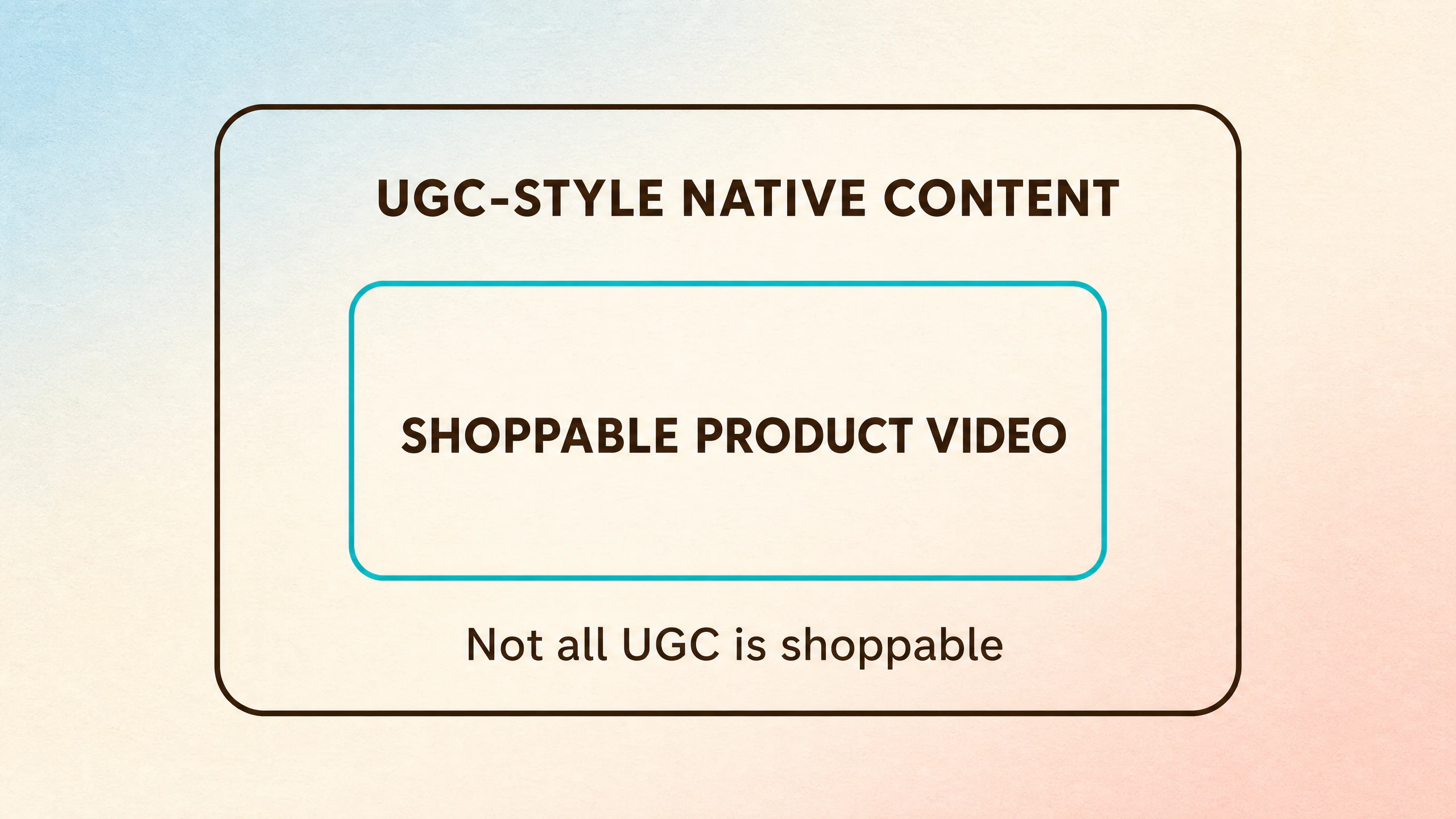
UGC, Shoppable Video, and the Subset Relation
Creators say "UGC" when content looks like a person discovered a product. Merchants say "shoppable video" when content must drive product clicks on TikTok, Meta, Amazon posts, or a Shopify storefront.
Every shoppable clip tries to look like UGC. not every UGC clip is optimized for conversion. Misunderstanding that relation causes two expensive mistakes: importing influencer campaign playbooks when you need posting volume, or hiring human creators for hook variants that AI could test in an afternoon.
Pippit's UGC content creator tool positions exactly here: creator-style output from prompts, links, and media — with product-link-to-video and brand-marketing templates underneath (Pippit UGC creator). The production question is tier selection, not whether AI exists. For the evidence question, see our guide to whether AI UGC converts on TikTok Shop.
Who / How / Why: For e-commerce marketers comparing synthetic UGC to creator marketplaces (2026 SERP: HeyFish, Creatify, Shortform Nation 70/30 hybrid). Goal: pick tier before subscribing to another avatar platform.
Three Production Tiers
| Tier | What it looks like | Cost / speed (typical) | Best categories | Weak categories |
|---|---|---|---|---|
| Human UGC | Real creator, real hands | $150–500+ / video. days | Beauty try-on, food taste, fit apparel | Low-margin gadgets needing 20+ variants |
| AI-assisted | Your script + product visuals. AI voice or partial avatar | $5–50 / video. hours | Home gadgets, demos with clear visual proof | Subjective skin/hair results |
| Fully synthetic batch | Product link → multiple native-style cuts | Low marginal cost. minutes | Hook testing, long-tail catalog | Regulated claims, testimonial-heavy health |
Vendor pages cite large cost gaps versus human UGC (HeyFish, 2026) — treat as marketing, not guaranteed margin. The structural advantage is variant count: teams that test ten hooks before scaling one outperform single-cut perfectionists on click-through learning speed, even when each synthetic cut converts slightly lower than a strong human creator.
Format still matters. A synthetic "GRWM" without a believable routine arc underperforms a demo or POV format matched to the SKU. AI UGC fails when teams copy trend *skin* without the *proof mechanism* the format requires.
When Synthetic Beats Hiring Creators
Synthetic wins when:
- You need high daily or weekly post volume and creator outreach cannot keep pace
- The product sells on visual demo (gadget, organizer, pet tool) not personal credibility
- You are faceless by choice and the alternative is not posting
- Your workflow is paid social or marketplace content, not long-form creator monetization programs with separate AI rules
Human UGC wins when:
- Category trust requires real skin, fit, or taste
- Comments ask "is this your real result?" and synthetic breaks the loop
- You are building a persistent creator identity for brand deals beyond one catalog
- Regulatory scrutiny on claims is high — synthetic testimonial tone is a liability
Hybrid 70/30: AI generates hook variants. humans reshoot winners for account trust on hero products. You are allocating SKU tiers, not choosing one religion.
Compliance Across Tiers
Disclose paid partnerships clearly on each platform. Label realistic AI when Tier 3 uses synthetic people. Never fabricate testimonials from AI personas claiming personal results you cannot substantiate.
TikTok, Meta, and YouTube each provide AI-generated content toggles. regional laws (EU AI Act Article 50, US state synthetic-performer rules effective 2026) add disclosure duties for realistic synthetic humans in ads (ngram disclosure guide, 2026). For platform-by-platform AI labeling on social commerce, our TikTok AI content rules article covers one major channel in depth — the production takeaway applies cross-platform: label synthetic realism, do not invent experience.
When Tier 3 uses a persistent synthetic presenter rather than testimonial-style UGC, see AI custom avatar videos for e-commerce for face, voice-clone, and disclosure decisions.
Tool Comparison (Fair, Not Exhaustive)
| Tool | Strength | Limit |
|---|---|---|
| Pippit UGC creator | Agent mode + link/media intake. multi-template ecommerce | Breadth over single-channel depth |
| Creatify | Batch UGC from product URLs. ad-structure templates | You own compliance and angle choice |
| HeyGen / avatar suites | Presenter consistency | Not a full research-to-feedback loop alone |
| [Human UGC agencies and platforms](/blog/best-ugc-platforms-for-creators) | Trust in high-sensitivity categories | Slow, expensive per variant |
For orchestration across research through feedback — not just avatar generation — see AI commerce agent for e-commerce.
For the wider production taxonomy that places UGC beside demos, explainers, and format-led videos, see the TikTok video formats framework.
Conclusion
AI UGC content creator tooling is a production tier, not a moral shortcut. Shoppable video lives inside the UGC aesthetic because native beats polished — but native does not always require a rented creator. Match tier to category trust, label synthetic content honestly, and reserve human UGC for SKUs where face-level credibility moves clicks.
If volume is the bottleneck, synthetic and hybrid tiers exist to learn faster. If trust is the bottleneck, hire humans for hero products and automate the long tail.
Once the production tier is clear, , then keep the disclosure and human-review gates above before publishing.